
The support is there. So why aren't people using it?
Low take-up rarely means low need. Six barriers HR usually only spots a year in, and five things that remove them.
A year after launch, HR opens the report and sees lower numbers than it promised the board. The first thought: people don't need it. It's a comfortable thought and it's almost always wrong. The same people are going off sick with “exhaustion”, leaving six months after a promotion and crying in their cars in the car park. The need is there. What's missing is the route from that need to a first conversation with a specialist.
“My problem isn't serious enough”
This is the first barrier and the biggest. In a study by Mindgram and Experience Institute from July 2026, 54% of people who had access to psychological support at work didn't use it because they decided their problem wasn't “serious enough”. CAWI survey, 2,302 working Poles.
Behind that number is the idea that psychological help is for people in crisis, after trauma, with a diagnosis. Someone who's been sleeping badly for three months and arguing with their partner about money doesn't see themselves in that picture. They wait until things are “really bad”. And when things are really bad, they no longer have the energy to look for help.
Company communications usually reinforce that picture. “Psychological support” sounds serious. “Wellbeing programme” sounds like it's for no one in particular. Neither says: this is for you too, and for your teenager who's stopped talking to you.
“What if the company finds out?”
The second barrier is the fear that using it will leave a trace. That their manager will find out. That when the next round of redundancies comes, someone will pull out a list. People rarely say this out loud. Instead they ask, “Is this through the company?” and leave it there.
Only specifics take this fear away. Not “your data is safe”, but: you sign up yourself, with a personal email or a code; nobody in the company can see who created an account or who they talked to; the company gets an aggregate report, and only once a group is above a set size. Those three sentences need repeating at every opportunity, by someone people trust.
Managers need to hear this separately. Some of them won't use it themselves for the same reason: they're afraid the board will see that “the manager isn't coping”. A manager who's been told their own sessions are invisible too stops worrying and starts recommending it.
A benefit mentioned once
The third group of barriers is organisational. The company announced the support at the launch meeting, sent one email and put up one intranet post. Eight months have gone by. New starters don't know it exists. Everyone else has forgotten where the link was.
Sometimes the benefit is literally hidden. It sits in the benefits platform between the gym membership and the cinema tickets, on page three, under a name that means nothing. To find it, you have to know it's there.
Sometimes the line manager has said nothing. HR wrote it, the board signed it off, and the head of department never mentioned it. What counts for an employee is what their own boss says. If the boss says nothing, the benefit doesn't exist.
And the simplest barrier of all: no access. People on the production floor, in the shop, in the warehouse don't have a work email. They don't sit at a computer. If registration needs a company email address, half the workforce is shut out on day one.
What works
An announcement from the CEO or HR director, in their own words, not read from a script. One sentence on why we're doing this and one saying nobody will see who uses it. It lands hardest when the speaker admits they've been through a stretch where a conversation like that would have helped. Two minutes recorded on a phone works better than a professionally produced video, because you can see it's a person talking, not the marketing department.
Real situations instead of “wellbeing”. In your communications, name situations: a divorce, a mortgage payment that no longer adds up, a teenager shut away in their room, three hours' sleep a night, looking after a sick mum, dreading a conversation with the boss. People should be able to find themselves on that list. Nobody finds themselves in “wellbeing”.
A regular rhythm. Once a month, one topic, one channel, one paragraph. Money in January, sleep in March, children going back to school in September. No campaign, no poster with a slogan. After a year, everyone in the company has heard about the support twelve times, and at least once about something that applies to them.
Leaders as the first users. Before you announce the support to the whole company, give managers access and ask them to create an account and book one session. A manager who's been through it talks about it differently. They know registration takes a few minutes, they know what the first session is like, and they aren't afraid to recommend it.
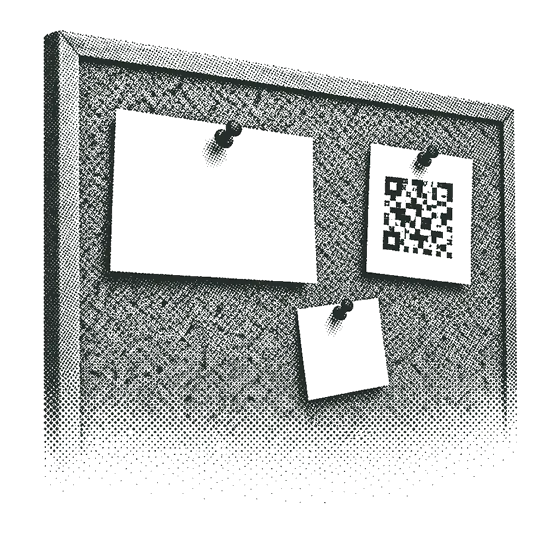
Access without a work email. A company code, a QR code on a poster in the changing room, signing up from a personal phone. If someone on the line can get in from their own mobile on their break, the benefit covers the whole workforce. If they can't, it covers the office.
Where to start
Ania, an HRBP at a manufacturing company, started with one thing: she asked the plant director to say two sentences about the support, in his own words, at the morning briefing. Then she put up a poster with a QR code in every changing room. On top of that, one topic a month on the noticeboard by the canteen. Nothing else for six months. People started asking their supervisors whether it was “really anonymous”, and the supervisors knew what to say.
Start by checking whether an employee without a work email can book a session with a specialist today, from their own phone. If they can't, the rest of this list can wait.